 Groundschool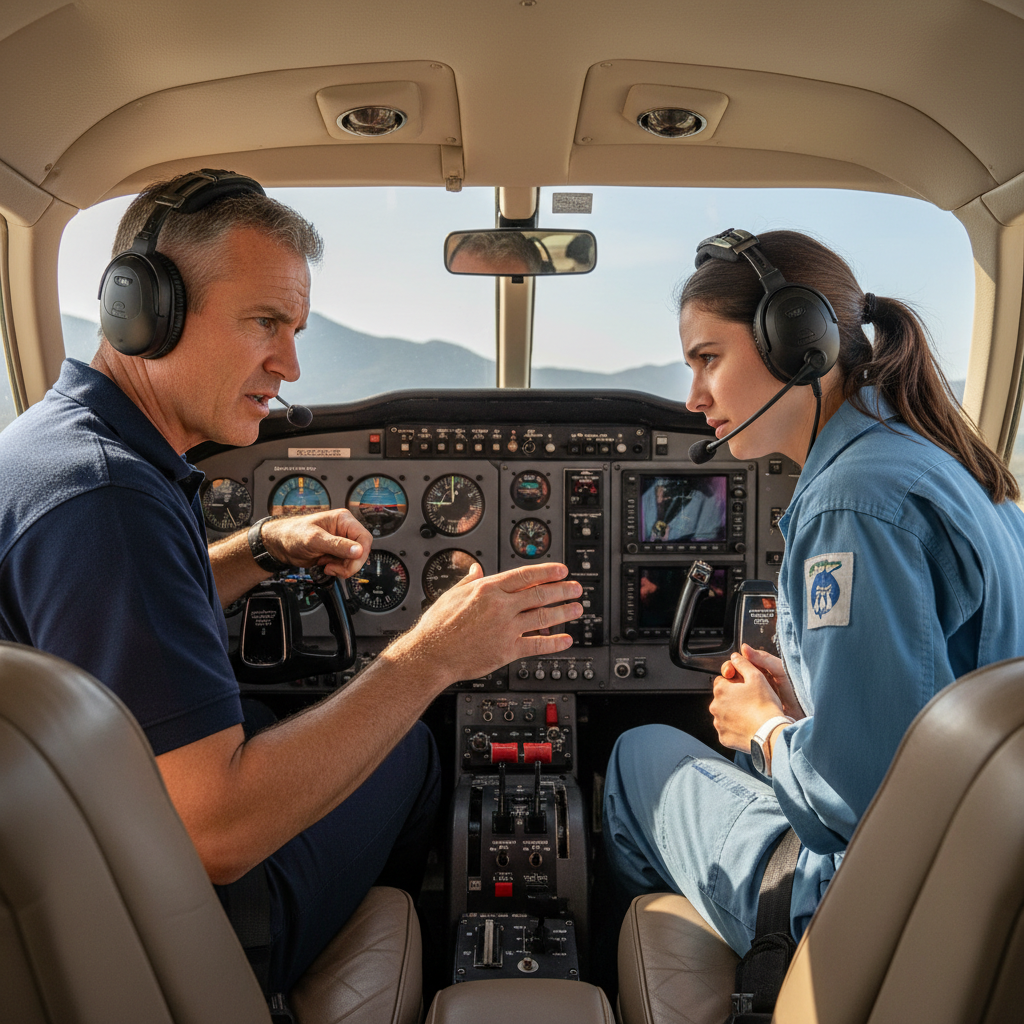
Your First Lesson
Is Free.
No Logbook
Required.
We walk you from the left seat of a Cessna 172 all the way to your Private Pilot Certificate — one transparent phase at a time.
Your Training Syllabus
Phase 1 of 5 — Discovery Flight ✓
No pressure. No pre-reading. Just 60 minutes in the left seat.
Who Flies With Us
Three very different people.
One empty left seat.
The desk job didn't kill the dream.
You're in your thirties, maybe pulling equity from a home you've owned for six years. The ATP hiring wave is real and you know it. You want a structured path with an honest timeline — not vague promises about passion.
"I told myself I'd do it before 40. I started at 38 and had my certificate at 39."
— Marcus T., commercial airline applicant
You need hours. We have airplanes.
Regional carriers are hiring and the 1,500-hour rule means you need to start building time now. Every hour in our C172 counts toward your ATP minimums. We train to Part 61 standards with checkride pass rates above 90%.
"I went from zero to checkride in 11 weeks flying five days a week."
— Priya S., regional airline first officer
You already know the procedures. Now feel the crosswind.
You've flown ILS approaches in X-Plane at 2 a.m. You understand ATC phraseology. The gap between your sim hours and real muscle memory is smaller than you think — and far more satisfying to close.
"My MSFS hours didn't count in the logbook but they absolutely counted in the cockpit."
— James O., private pilot since 2025
The Full Journey
Private Pilot Certificate,
phase by phase.
No mystery. No vague timelines. This is exactly what you'll do, in exactly this order, with real hour estimates at every step.
Phase 1: You'll touch the controls for the first time — and the airplane will actually respond.
Discovery Flight
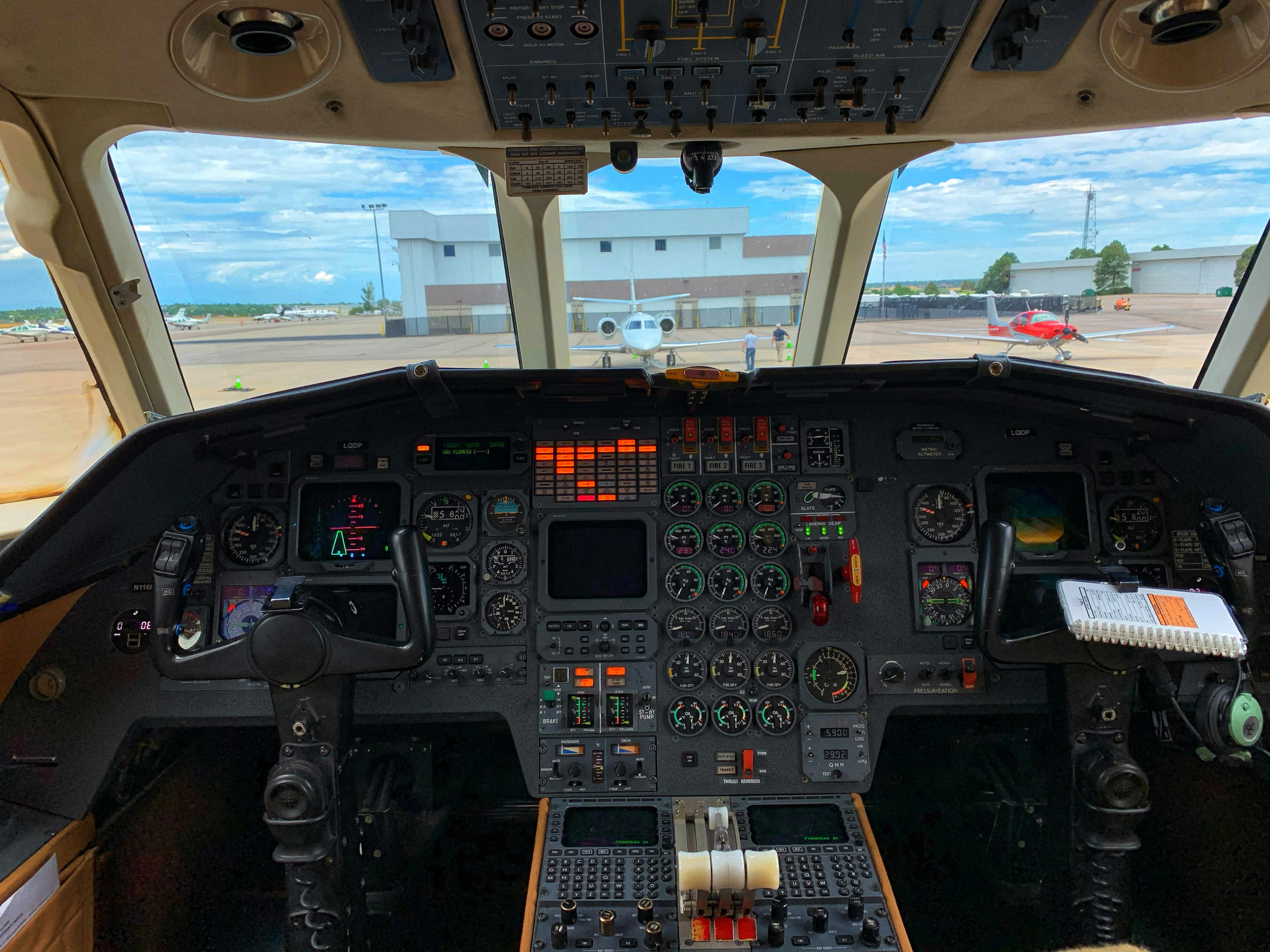
Sixty minutes. No prerequisites. Your instructor covers the basics on the ground — how the four forces of flight work, what each instrument is telling you — then you climb in and fly. You'll take the yoke over the practice area. The airplane is more forgiving than you expect. So is the fear.
What you'll learn
- How control surfaces create movement
- Basic straight-and-level flight
- Why the C172 is the safest trainer built
- What the next 40+ hours look like
"I expected to be a passenger. My instructor handed me the controls ten minutes in. I wasn't ready for how quiet the sky is."
— Rachel K., Discovery Flight, October 2025
Ready to start here?
Your Discovery Flight is free. 60 minutes. One logbook entry. The rest is up to you.
Phase 2: The regulations, weather, and navigation that keep you legal and alive.
Ground School Fundamentals
Ground school is where most students feel dumbest and grow fastest. Airspace classes, VOR radials, METAR decoding, weight-and-balance calculations. It's dense. We teach it in sequence, tied directly to what you're doing in the airplane that week, so the abstract becomes immediately practical.
What you'll learn
- FAA regulations and airspace structure
- VFR sectional chart reading and navigation
- Weather interpretation: METARs, TAFs, pireps
- Weight & balance, performance calculations
- Emergency procedures and aeronautical decision-making
"I failed my first practice knowledge test at 62%. Passed the real one at 89%. Ground school taught me how to think, not just what to memorize."
— David L., Private Pilot 2025

Phase 3: You'll fly alone for the first time — and the instructor's seat will be empty.
Pre-Solo Maneuvers
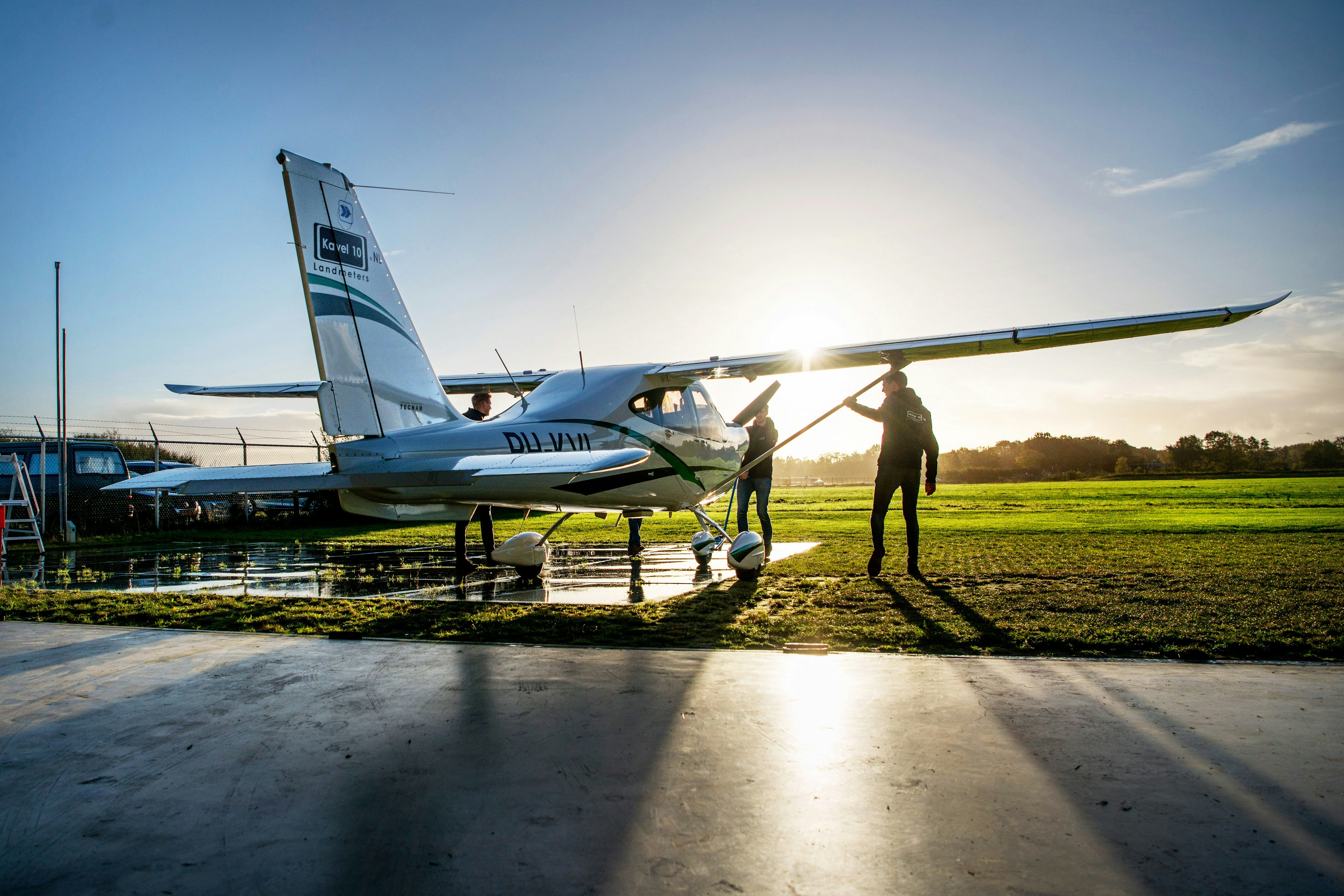
This is where the fear and competence arrive together. Stalls, steep turns, ground reference maneuvers, traffic pattern work. Your instructor is watching for the moment you stop reacting and start flying — the shift from passenger to pilot-in-command. Three satisfactory solo takeoffs and landings are required before you go.
What you'll learn
- Power-off and power-on stalls
- Steep turns to 45° bank
- S-turns and turns around a point
- Traffic pattern: crosswind, downwind, base, final
- Go-around procedure
"My instructor got out of the plane, closed the door, and just stood there. I taxied out. The runway felt twice as wide."
— Tom B., first solo, August 2025
Phase 4: You'll navigate to airports you've never seen, entirely on your own.
Solo Cross-Country Flying
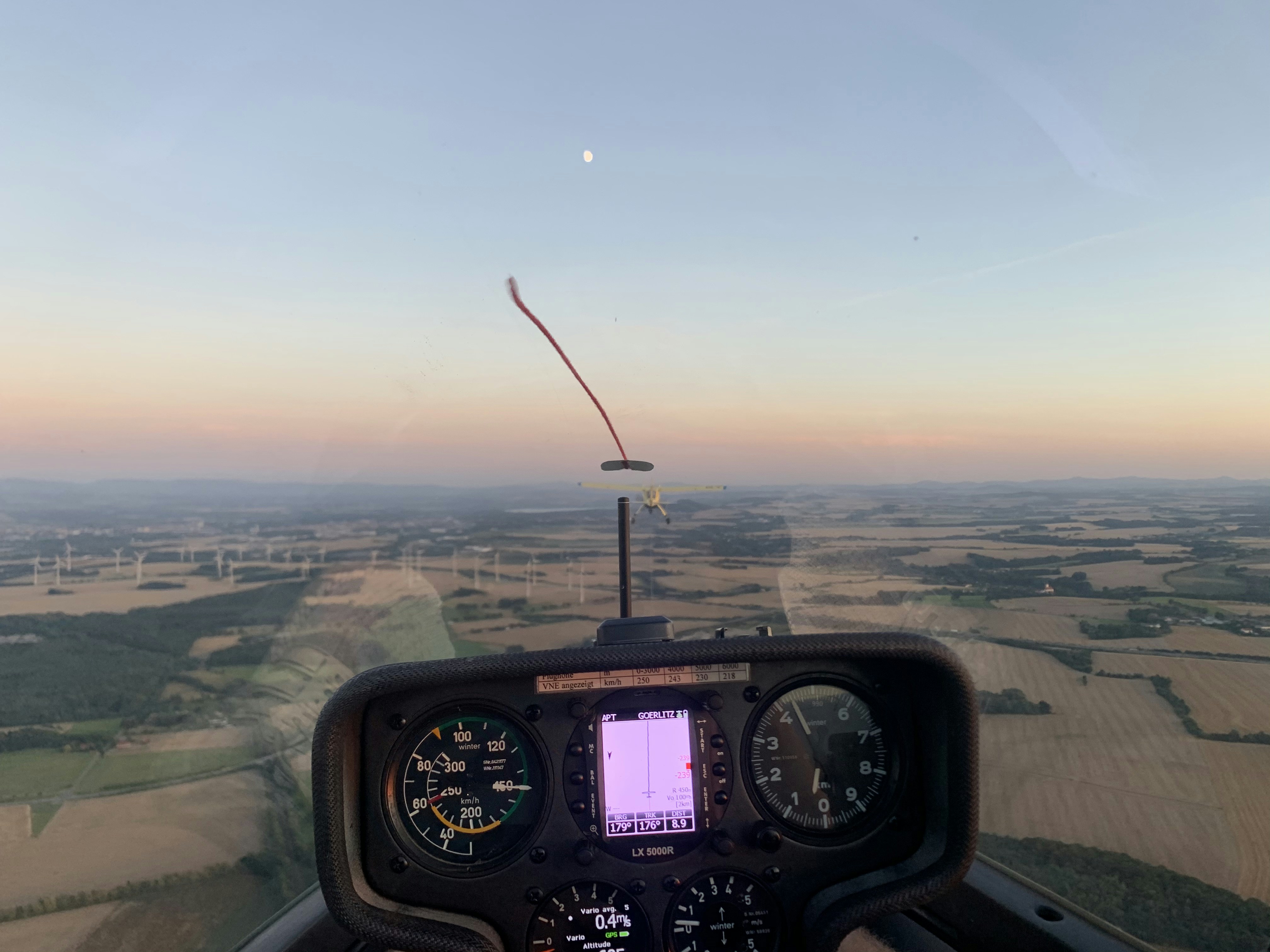
The FAA requires 10 hours of solo time, including 5 cross-country hours and one flight of at least 150 nautical miles. You'll plan the route, file the flight plan, handle ATC yourself, and land at unfamiliar airports. This is where the certificate starts feeling real — not theoretical.
What you'll learn
- VOR and GPS navigation to unfamiliar airports
- ATC communication at towered airports
- Fuel planning and divert procedures
- 150 NM solo cross-country (FAA requirement)
- Night flying: 3 hours including 10 full-stop landings
"I landed at an airport 80 miles away, bought a coffee, and flew home. Nobody helped me. I still think about that flight."
— Amara J., solo XC, November 2025
Phase 5: An FAA examiner will hand you a piece of plastic with your name on it.
Checkride Preparation
The Private Pilot checkride is an oral exam plus a flight test, evaluated against the FAA's Airman Certification Standards. Our stage checks mirror the checkride format exactly — you'll fly with a different instructor, answer scenario-based questions, and demonstrate every ACS task. Our pass rate reflects the preparation, not luck. You'll need a 70% on the written knowledge exam first.
What you'll learn
- ACS oral: risk management and aeronautical decision-making
- All required flight maneuvers to ACS standards
- Stage 3 check with a different CFI
- FAA knowledge test (70% minimum)
- Practical test with FAA-designated examiner
"My examiner asked me to divert mid-flight. I'd practiced it twelve times. I diverted. He signed my temporary certificate on the ramp."
— Carlos M., checkride pass, January 2026
Real Numbers
No guesswork.
Just hours and months.
The FAA publishes the minimums. We publish what students actually experience. Both matter.
Minimum flight hours
Part 61 — most students finish in 60–75
Typical completion
Flying weekends; accelerated in 2–3 months full-time
First-attempt checkride pass rate
National average is ~70% — we train to the ACS, not around it
Ground school training
Part 141 minimum — taught alongside your flight phases
Weekend-Pace Timeline (4–6 months)
Discovery flight, logbook issued, ground school enrollment
Stalls, steep turns, pattern work, stage check #1
First solo, 10 solo hours, stage check #2
150 NM solo XC, night flying, instrument hours
Stage check #3, knowledge exam, practical test
Eligibility at a glance
- At least 17 years old to receive the certificate
- Solo flight permitted at 16
- Read, speak, write, and understand English
- Third-class FAA medical certificate
Start Here
The runway is clear.
Your move.
Two ways to start. One free flight. One free study plan. Neither requires a logbook, a medical, or a commitment.
Book Your Free Discovery Flight
60 minutes in a Cessna 172. Your instructor handles everything. You handle the yoke.
We'll confirm within 24 hours. No charge. No commitment.
FAA Certified Instructors
90%+ Checkride Pass Rate
No Hidden Fees
Small Class Sizes